Built on decades of innovation, Trimble machine and grade control systems help to improve accuracy, productivity, safety and quality on the jobsite. Gain precision and efficiency across every phase of your project.
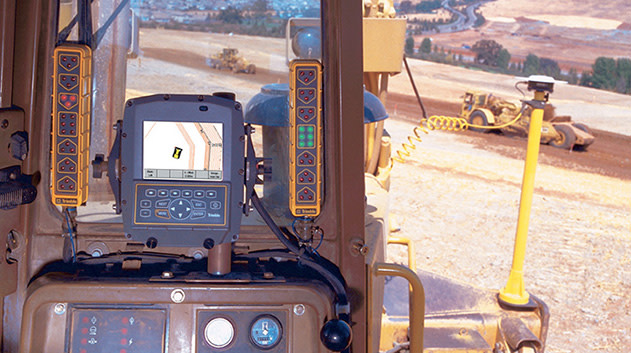
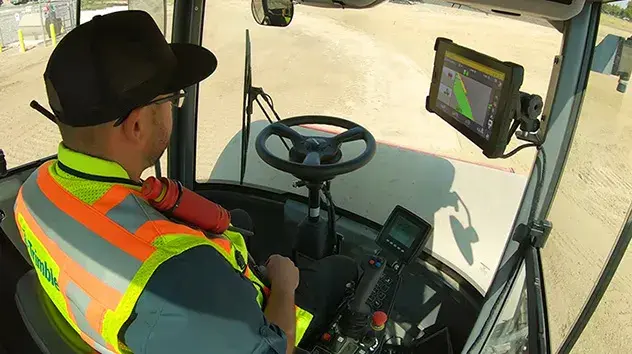
Machine control systems combine positioning sensors with computer displays to give operators better insight into and control over their work. Use cases include:
Enable operators to accurately position buckets, blades and other implements while eliminating the need for surveying, staking and constantly checking work in progress.
Utilize labor and equipment efficiently to reduce costs and minimize wear-and-tear.
Improve connectivity between teams and disciplines by sharing model data and information on work performed.
Machine control systems are growing increasingly autonomous, and the next generations will likely include innovations like artificial intelligence, machine learning and 5G.

Trimble machine control helps to maximize project budgets by reducing errors, improving data collection and reducing operator guesswork.

Precision guidance solutions enable farmers to improve crop yields, drive efficiencies and reduce environmental impact.

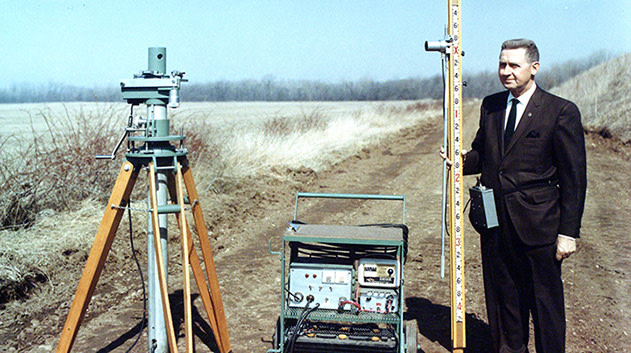
The machine control we know today is the result of numerous technological advances, particularly in positioning and automation. Trimble, along with innovators in agriculture, geospatial, heavy equipment and academia, played an important role in driving those innovations forward.
These advancements deliver unmatched accuracy and precision through automation and real-time feedback from the field. By eliminating errors, contractors achieve significant cost and productivity gains while virtually ensuring reduced rework on every site.
We have always imagined a scenario where all of the machines on the jobsite talk to each other in real-time, and that crews could receive real feedback about their work.
The history of machine control is a story of moving from manual stakes to digital precision. What began in the 1960s with simple laser-guided systems for agricultural drainage has evolved into the sophisticated, high-precision automation used on modern construction sites.
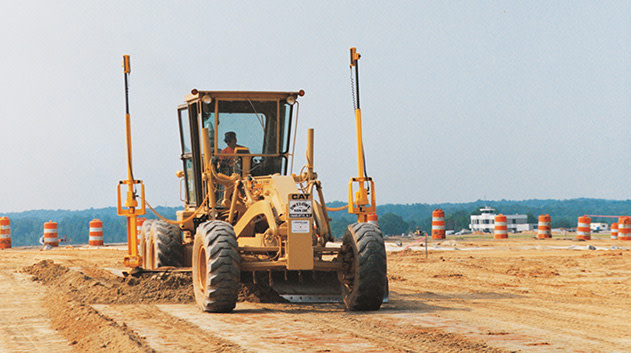
A machine control system uses GPS and sensors to guide heavy equipment. It automates blade or bucket positioning to improve accuracy and productivity.
Machine control automates equipment movement via GPS, while grade control specifically ensures the surface meets precise design elevations and slopes.
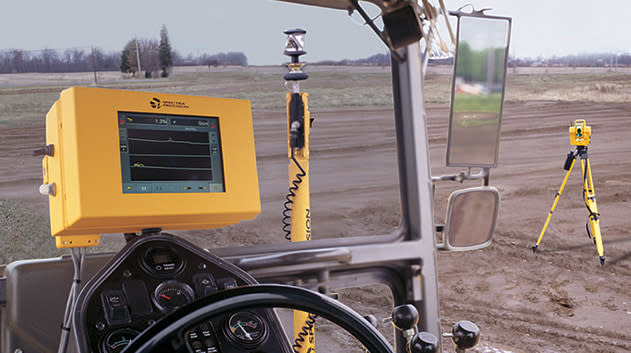
2D systems use lasers or sensors to manage height and slope on a single plane. 3D systems add GNSS/GPS to track the exact position on a 3D site model.
Key differences:
2D: Uses local references (lasers, stringlines) for simple slopes.
3D: Uses digital designs and GPS for complex contours and site-wide accuracy.
GNSS solutions provide centimeter-level accuracy (typically 1–3 cm). Precision depends on satellite signal, correction sources and local site conditions.
Yes. By providing real-time guidance to the design, machine control ensures accuracy on the first pass, cutting fuel use, labor and expensive rework.
Machine control supports excavators, dozers, motor graders, pavers, compactors, scrapers and drilling rigs for diverse site applications.
Supported machinery types:
Earthmoving: dozers, excavators, scrapers
Grading: motor graders, compact track loaders
Paving: asphalt pavers, cold planers, slipform pavers
Compaction: soil and asphalt compactors
Specialty: drilling, piling, and marine construction vessels
Watch video: Trimble Earthworks for excavators
To renovate a runway at Luxembourg Airport, construction teams needed to work overnight and reopen the runway every morning. See how Trimble machine control enabled this highly complex plan.
Boost your bottom line with modern machine control. From cutting rework and fuel consumption to reducing material costs, discover how Trimble technology accelerates your project ROI and site efficiency.
Buesing Corp. is a specialty contractor with a broad range of service offerings, from mass excavation to foundation drilling. Learn how Trimble machine control allows complex operations in challenging site and soil conditions.